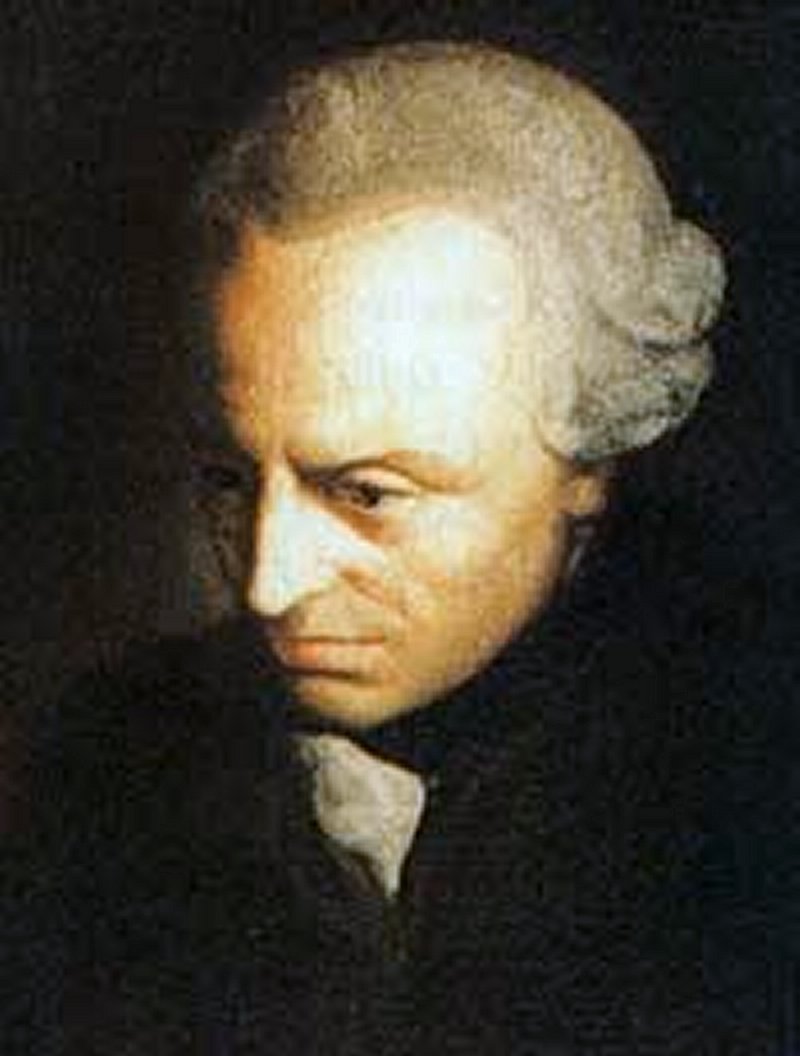
Secular, as you probably already know from reading the other posts, means without God. Nothing reminds me of Nietzsche than the words "without God". Frederick Nietzsche was born in the year 1844 in a small German town. His father was a Lutheran priest and he himself studied theology in university. By the end of his life, Nietzsche found himself a full 180 degrees from his Christian roots.
Nietzsche was extremely opposed to the mainstream forms of morality in his time, especially Christian morality and Kantism. The opus of Nietzsche's work in philosophy is known as the master-slave morality. His theory was that society was separated into two different classes of people, Master and Slave, and with them their own schools of morality. The people in the class of master are people in the position of power, above the rest of society. That means the slave in this dynamic is the rest of society; subject to a different set of moral rules. The slave morality is what we all have learned about morality; sympathy and empathy are good, being superior and independent is bad. The master morality, conversely, does not have a definitive right or wrong, but rather the values are made by the independent master for his/herself.
With the master-slave dynamic in mind, Nietzsche argued that true moral actions cannot exist while both schools of morality coexist. In other words, the true path is nihilism. Nihilism is a dirty word to most philosophers because it simply deciding that life has no meaning, right, wrong, good, bad etc. Nihilism and philosophy are essentially matter and anti-matter in the sense that when they combine, there's just catastrophic explosions and no progress is made.
Showing posts with label morality. Show all posts
Monday, December 12, 2011
Sunday, December 11, 2011
Kant: Who he was and how he flipped philosophy on its side
I'd like to start this blog off by asking the reader to appreciate my journalistic professionalism in not making any puns with the philosopher in question's name. Sometimes I kant help myself. Just kidding, his last name isn't pronounced like "can't" anyways. ANYWAYS...
Immanuel Kant was born in Germany in the year of 1724. This was almost 300 years ago, and while he obviously was not a great philosopher right out of the womb, his ideas are still important in any moralist philosophy discussion to this day. There isn't much to say about Kant's life, since life was much more simple back in those days. His family was strictly religious, and his life was pretty monotonous. He never married, but was supposedly popular.
Now Immanuel Kant is someone you want to know about because he focused mainly on ethics and what should be done. To Kant, whether an action is moral or not does not depend on the action directly. An action is moral if the person performing the action has absolutely pure intentions. Let's examine a situation where one action has multiple moral implications.
Situation: I donate $1,000 to a poor family
Variable 1: I did it because I am a good Christian
V2: I did it because it is a moral thing to do
V3: I did it anonymously, I am a millionaire
V4: I did it anonymously, I am middle class
To Kant, the only action that is truly moral is V4. The rest of the actions only appear to be moral. In variable 1, you do this 'good' act because it pleases God. Pleasing God gets you into Heaven, or conversely displeasing God gets you into Hell. Therefore, this action is done out of fear of God, something that Kant emphasized as being a common source of appearing morality. Variable 2 is also amoral because you perform the donation because it is expected of humans to be moral. Therefore, you are merely keeping up appearances (aka you don't necessarily care about making a positive impact on the family). Variable 3 is only slightly amoral. While you are not seeking a direct reward from donating $1000, this amount of money is minute relative to your available funds. Kant would argue that if you are truly trying to be 'good' and to positively impact the family in question, you would allocate a significant portion of your wealth. In other words, the money you saved is the indirect reward of doing this action.
Variable 4 is moral because you donate a relatively significant amount of money to the family without any reward. Anonimity means you are not going to get gratitude (if you are expecting the family to somehow make an effort to thank the donator, such as a press conference, refer to variable 2). You gave enough to make an impact without leaving yourself uncomfortably without money. This dynamic can be used to examine the morality of any action (through Kant's eyes).
The ideas of Kant are so revolutionary to philosophers (and enough to get many people to yawn with gusto) because of two factors; its logical soundness and its controversial effect on all other schools of morality. Since Kant's idea that all moral actions with a driving force other than doing 'good' are amoral, that means that a lot of moral schools go under fire. Religion, specifically, turns out to be very much amoral because of the implication of Heaven and Hell relative to worldly actions. Any ideas on morality are now primarily passed through the lens of Kantian thought before they can begin to be appreciated by post-Kantian philosophers. This is why he is one of the superstars of philosophy; whether or not a moral code is valid ultimately depends on it's conformity to the aforementioned dynamic.
Immanuel Kant was born in Germany in the year of 1724. This was almost 300 years ago, and while he obviously was not a great philosopher right out of the womb, his ideas are still important in any moralist philosophy discussion to this day. There isn't much to say about Kant's life, since life was much more simple back in those days. His family was strictly religious, and his life was pretty monotonous. He never married, but was supposedly popular.
Now Immanuel Kant is someone you want to know about because he focused mainly on ethics and what should be done. To Kant, whether an action is moral or not does not depend on the action directly. An action is moral if the person performing the action has absolutely pure intentions. Let's examine a situation where one action has multiple moral implications.
Situation: I donate $1,000 to a poor family
Variable 1: I did it because I am a good Christian
V2: I did it because it is a moral thing to do
V3: I did it anonymously, I am a millionaire
V4: I did it anonymously, I am middle class
To Kant, the only action that is truly moral is V4. The rest of the actions only appear to be moral. In variable 1, you do this 'good' act because it pleases God. Pleasing God gets you into Heaven, or conversely displeasing God gets you into Hell. Therefore, this action is done out of fear of God, something that Kant emphasized as being a common source of appearing morality. Variable 2 is also amoral because you perform the donation because it is expected of humans to be moral. Therefore, you are merely keeping up appearances (aka you don't necessarily care about making a positive impact on the family). Variable 3 is only slightly amoral. While you are not seeking a direct reward from donating $1000, this amount of money is minute relative to your available funds. Kant would argue that if you are truly trying to be 'good' and to positively impact the family in question, you would allocate a significant portion of your wealth. In other words, the money you saved is the indirect reward of doing this action.
Variable 4 is moral because you donate a relatively significant amount of money to the family without any reward. Anonimity means you are not going to get gratitude (if you are expecting the family to somehow make an effort to thank the donator, such as a press conference, refer to variable 2). You gave enough to make an impact without leaving yourself uncomfortably without money. This dynamic can be used to examine the morality of any action (through Kant's eyes).
The ideas of Kant are so revolutionary to philosophers (and enough to get many people to yawn with gusto) because of two factors; its logical soundness and its controversial effect on all other schools of morality. Since Kant's idea that all moral actions with a driving force other than doing 'good' are amoral, that means that a lot of moral schools go under fire. Religion, specifically, turns out to be very much amoral because of the implication of Heaven and Hell relative to worldly actions. Any ideas on morality are now primarily passed through the lens of Kantian thought before they can begin to be appreciated by post-Kantian philosophers. This is why he is one of the superstars of philosophy; whether or not a moral code is valid ultimately depends on it's conformity to the aforementioned dynamic.
Labels:
deonotological,
god,
kant,
morality,
secular,
secular ethics
Subscribe to:
Posts (Atom)