Hi again, I've been really busy with school lately and have not been able to write much new information on here. This is yet another copout of work for me, but nonetheless it's very interesting and inspiring. The video is long (~30 mins for part 1), but to me it is always pleasant to hear the viewpoints of the more artistically inclined. More philosophy will follow in the coming week (or two), I promise!
Showing posts with label god. Show all posts
Monday, January 30, 2012
Sunday, December 11, 2011
Kant: Who he was and how he flipped philosophy on its side
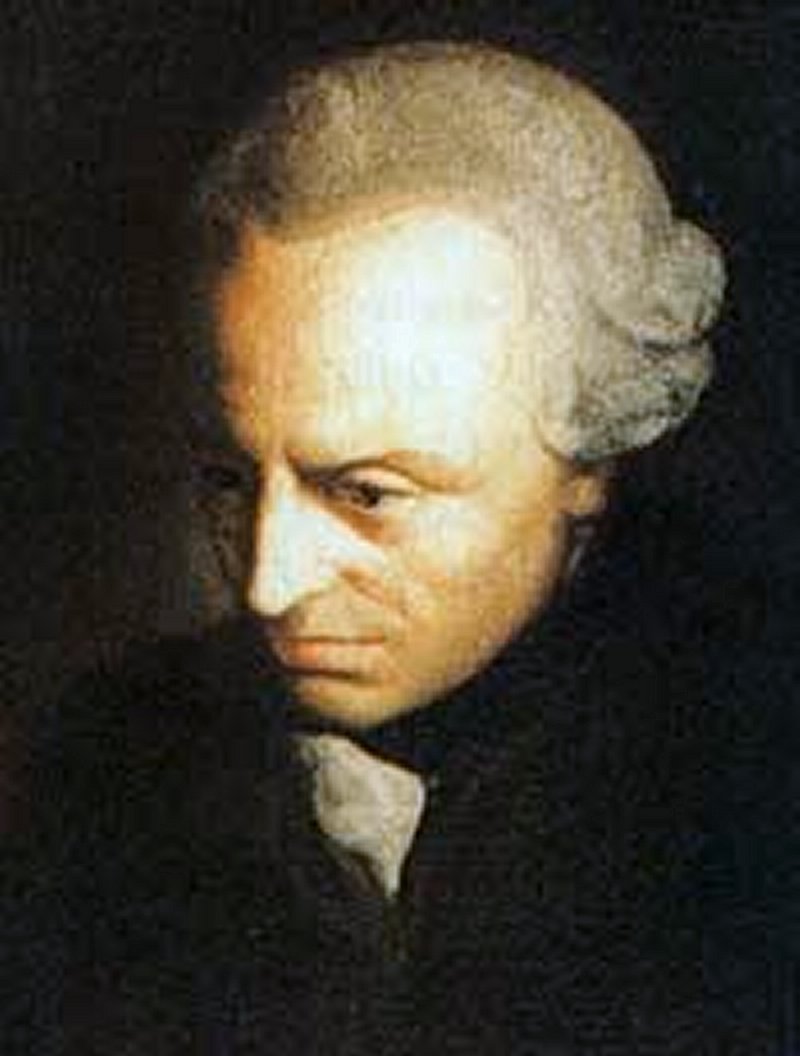
I'd like to start this blog off by asking the reader to appreciate my journalistic professionalism in not making any puns with the philosopher in question's name. Sometimes I kant help myself. Just kidding, his last name isn't pronounced like "can't" anyways. ANYWAYS...
Immanuel Kant was born in Germany in the year of 1724. This was almost 300 years ago, and while he obviously was not a great philosopher right out of the womb, his ideas are still important in any moralist philosophy discussion to this day. There isn't much to say about Kant's life, since life was much more simple back in those days. His family was strictly religious, and his life was pretty monotonous. He never married, but was supposedly popular.
Now Immanuel Kant is someone you want to know about because he focused mainly on ethics and what should be done. To Kant, whether an action is moral or not does not depend on the action directly. An action is moral if the person performing the action has absolutely pure intentions. Let's examine a situation where one action has multiple moral implications.
Situation: I donate $1,000 to a poor family
Variable 1: I did it because I am a good Christian
V2: I did it because it is a moral thing to do
V3: I did it anonymously, I am a millionaire
V4: I did it anonymously, I am middle class
To Kant, the only action that is truly moral is V4. The rest of the actions only appear to be moral. In variable 1, you do this 'good' act because it pleases God. Pleasing God gets you into Heaven, or conversely displeasing God gets you into Hell. Therefore, this action is done out of fear of God, something that Kant emphasized as being a common source of appearing morality. Variable 2 is also amoral because you perform the donation because it is expected of humans to be moral. Therefore, you are merely keeping up appearances (aka you don't necessarily care about making a positive impact on the family). Variable 3 is only slightly amoral. While you are not seeking a direct reward from donating $1000, this amount of money is minute relative to your available funds. Kant would argue that if you are truly trying to be 'good' and to positively impact the family in question, you would allocate a significant portion of your wealth. In other words, the money you saved is the indirect reward of doing this action.
Variable 4 is moral because you donate a relatively significant amount of money to the family without any reward. Anonimity means you are not going to get gratitude (if you are expecting the family to somehow make an effort to thank the donator, such as a press conference, refer to variable 2). You gave enough to make an impact without leaving yourself uncomfortably without money. This dynamic can be used to examine the morality of any action (through Kant's eyes).
The ideas of Kant are so revolutionary to philosophers (and enough to get many people to yawn with gusto) because of two factors; its logical soundness and its controversial effect on all other schools of morality. Since Kant's idea that all moral actions with a driving force other than doing 'good' are amoral, that means that a lot of moral schools go under fire. Religion, specifically, turns out to be very much amoral because of the implication of Heaven and Hell relative to worldly actions. Any ideas on morality are now primarily passed through the lens of Kantian thought before they can begin to be appreciated by post-Kantian philosophers. This is why he is one of the superstars of philosophy; whether or not a moral code is valid ultimately depends on it's conformity to the aforementioned dynamic.
Immanuel Kant was born in Germany in the year of 1724. This was almost 300 years ago, and while he obviously was not a great philosopher right out of the womb, his ideas are still important in any moralist philosophy discussion to this day. There isn't much to say about Kant's life, since life was much more simple back in those days. His family was strictly religious, and his life was pretty monotonous. He never married, but was supposedly popular.
Now Immanuel Kant is someone you want to know about because he focused mainly on ethics and what should be done. To Kant, whether an action is moral or not does not depend on the action directly. An action is moral if the person performing the action has absolutely pure intentions. Let's examine a situation where one action has multiple moral implications.
Situation: I donate $1,000 to a poor family
Variable 1: I did it because I am a good Christian
V2: I did it because it is a moral thing to do
V3: I did it anonymously, I am a millionaire
V4: I did it anonymously, I am middle class
To Kant, the only action that is truly moral is V4. The rest of the actions only appear to be moral. In variable 1, you do this 'good' act because it pleases God. Pleasing God gets you into Heaven, or conversely displeasing God gets you into Hell. Therefore, this action is done out of fear of God, something that Kant emphasized as being a common source of appearing morality. Variable 2 is also amoral because you perform the donation because it is expected of humans to be moral. Therefore, you are merely keeping up appearances (aka you don't necessarily care about making a positive impact on the family). Variable 3 is only slightly amoral. While you are not seeking a direct reward from donating $1000, this amount of money is minute relative to your available funds. Kant would argue that if you are truly trying to be 'good' and to positively impact the family in question, you would allocate a significant portion of your wealth. In other words, the money you saved is the indirect reward of doing this action.
Variable 4 is moral because you donate a relatively significant amount of money to the family without any reward. Anonimity means you are not going to get gratitude (if you are expecting the family to somehow make an effort to thank the donator, such as a press conference, refer to variable 2). You gave enough to make an impact without leaving yourself uncomfortably without money. This dynamic can be used to examine the morality of any action (through Kant's eyes).
The ideas of Kant are so revolutionary to philosophers (and enough to get many people to yawn with gusto) because of two factors; its logical soundness and its controversial effect on all other schools of morality. Since Kant's idea that all moral actions with a driving force other than doing 'good' are amoral, that means that a lot of moral schools go under fire. Religion, specifically, turns out to be very much amoral because of the implication of Heaven and Hell relative to worldly actions. Any ideas on morality are now primarily passed through the lens of Kantian thought before they can begin to be appreciated by post-Kantian philosophers. This is why he is one of the superstars of philosophy; whether or not a moral code is valid ultimately depends on it's conformity to the aforementioned dynamic.
Labels:
deonotological,
god,
kant,
morality,
secular,
secular ethics
Saturday, December 10, 2011
Welcome!
Hello reader of this blog! I started writing this blog because as a college student, I know about the endless walls of texts that come along with any journey of learning. There is no better example of extremely thick books about one specific subject that consist of 90% unnecessary words than books on philosophy. So who is my blog aimed at? Essentially anybody that wants to know more about the names every one of us hears such as Kant and Rand. And if you know a little about these famous philosophers, this blog may still be of use for you. If you are a Kantian scholar with a degree in ethics, this blog will probably be too vague for you to derive any pleasure from reading it. If this is the case, please open one of the aforementioned books about philosophy and feel free to comment with suggestions... or blatant hate mail.
Labels:
ethics,
god,
kant,
philosophy,
rand,
secular,
secular ethics,
utilitarian
Subscribe to:
Posts (Atom)
